
Parking Lot Line Striping in Myrtle Beach: A Property Owner's Guide to Fresh, Clear Markings
September 30, 2026
QUICK ANSWER: Parking lot line striping is the painted layout of stalls, arrows, crosswalks, and accessible spaces that keeps drivers and pedestrians organized. Most lots need fresh striping every 12 to 24 months, though heavy traffic, strong sun, and coastal salt air can shorten that window to as little as 6 to 12 months. Fading lines, uneven stalls, and hard-to-read arrows are the clearest signs it's time to restripe. Fresh markings improve visibility, guide traffic, and keep a property looking cared for.
A driver pulls into a shopping center on Highway 17, squints at the pavement, and hesitates. The stall lines have washed out to faint gray shadows, the arrows point nowhere in particular, and two cars end up nosed toward the same spot. That small moment of confusion happens thousands of times a day in faded lots, and it is exactly what clear line striping prevents.
Parking lot markings do quiet, constant work. They tell people where to drive, where to walk, and where to stop. When those lines are crisp, the whole property runs smoothly. When they fade, drivers guess, and guessing in a busy lot leads to dinged bumpers and frustrated visitors. For property owners in Myrtle Beach, where sun and salt air wear paint down faster than in many inland areas, keeping striping sharp is an ongoing part of good pavement care.
What Line Striping Actually Covers
The phrase "line striping" sounds like it means straight white lines and nothing else. In practice, a full layout includes several types of markings, each with a job.
Stall Lines And Parking Layout
Clearly marked stall lines define individual spaces and maximize available parking. Straight, evenly spaced stalls create a more organized lot, reduce confusion, and provide drivers with enough room to park and maneuver safely.
Directional Arrows And Lane Lines
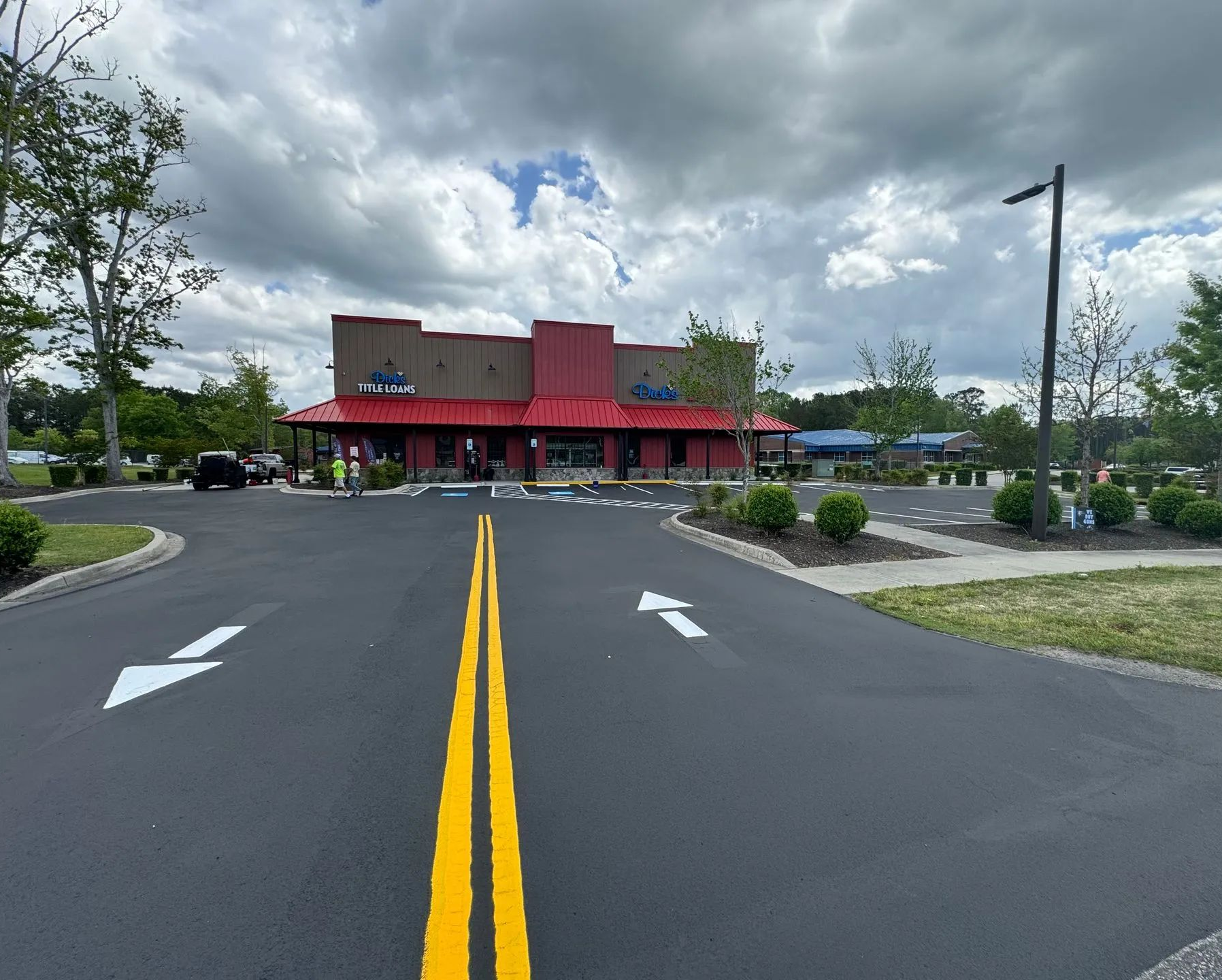
Directional arrows and lane lines guide vehicles through the parking lot with clear, predictable movement. Proper markings help drivers understand traffic flow, reduce confusion, and lower the risk of conflicts near corners, entrances, and busy areas.
Crosswalks And Pedestrian Paths
Clearly painted crosswalks and pedestrian paths provide people with defined routes between vehicles and building entrances. In busy retail and beachfront parking areas, visible markings help separate foot traffic from vehicles and improve overall pedestrian safety.
Accessible Parking Spaces
Accessible parking spaces include properly sized stalls, marked access aisles, and recognizable accessibility symbols. Clear markings help visitors identify designated spaces easily while supporting widely recognized accessibility requirements and providing convenient access near building entrances.
Stop Bars, Fire Lanes, And Curb Markings
Bold stop bars, curb markings, and clearly designated fire lanes identify areas where traffic control and access matter most. These markings help keep emergency routes open, improve organization, and make parking lot rules easier for drivers to understand.
Why Coastal Conditions Wear Striping Faster
Paint on pavement lives a hard life anywhere. Along the Grand Strand, it lives a harder one. Three forces do most of the damage.
Sun And UV Exposure
Long, bright days gradually fade parking lot paint. White and yellow lines lose contrast over time, while reflective, high-durability coatings resist fading longer. Even quality paint eventually wears under constant Myrtle Beach sunshine.
Salt Air And Moisture
Coastal humidity and salt-laden air can accelerate paint deterioration, especially with lower-grade coatings. Frequent rain adds moisture exposure, gradually weakening lines that have not bonded properly with the asphalt surface.
Traffic Volume
Vehicle tires gradually wear away painted lines through repeated turning, braking, and parking movements. Drive lanes and entrances experience the most abrasion, while busy retail lots typically need restriping sooner than quieter office properties.
Because of these factors, many coastal lots need attention on the shorter end of the general timeline. Industry guidance points to restriping most commercial lots every 12 to 24 months, and harsher settings such as coastal or high-traffic areas can call for repainting every 6 to 12 months, according to pavement maintenance sources.
Signs It's Time to Restripe
You do not need special tools to judge striping. A slow walk across the lot tells you most of what you need to know. Watch for these signals:
- Lines have faded to pale gray or barely show against the asphalt.
- Drivers park crooked or straddle two stalls because the borders are unclear.
- Arrows and lane markings are hard to follow, and traffic bunches up.
- Accessible spaces, access aisles, or crosswalks have lost their crisp edges.
- The lot was recently sealcoated, which covers old lines and calls for fresh striping on top.
If a few of these ring true, the markings have reached the point where they no longer do their job well. Repainting on a regular cycle, rather than waiting until lines vanish, keeps a lot readable year-round.
How the Striping Process Works
Good striping is less about the paint and more about the preparation and the plan. A dependable crew works through a few clear stages.
Surface Cleaning
Loose dirt, sand, and debris are swept or blown away before striping begins. Clean pavement gives paint a stronger bonding surface, while removing grit prevents uneven application, premature peeling, and blurry edges that can reduce the visibility of finished parking lot markings.
Layout And Measurement
For new lots or redesigns, the crew measures and marks the layout before applying paint. Stall counts, traffic flow, accessible parking spaces, drive lanes, and other markings are positioned carefully. During restriping, existing lines typically provide a reliable guide for placement.
Application
Using professional striping equipment, the team applies even, sharp lines in steady passes. Dry pavement and temperatures above roughly 50 degrees support proper adhesion and consistent results. Myrtle Beach’s generally favorable weather provides many suitable opportunities for efficient parking lot striping.
Drying And Curing
Many parking lot paints become dry to the touch within 30 minutes to an hour, although complete curing may take up to 24 hours. Keeping vehicles and pedestrians away from fresh markings during this period helps protect their appearance and durability.
TIP: Pair restriping with sealcoating whenever you can. Sealcoat covers old markings and gives a fresh, dark surface, so laying new stripes right after produces the sharpest contrast and stretches the value of both jobs.
Keeping Markings Sharp Longer
A few habits slow the fade and stretch the time between full restripes.
Choose Durable, Reflective Coatings
Higher-grade paints maintain color, reflectivity, and visibility longer despite intense sunlight, vehicle traffic, and coastal exposure, helping parking lot markings remain clear, attractive, and functional.
Sealcoat On A Schedule
Regular sealcoating protects asphalt from moisture, oxidation, and surface wear, creating a stronger foundation that helps parking lot striping adhere properly and last longer.
Inspect Once A Year
An annual inspection identifies fading, peeling, and worn markings early, allowing timely touch-ups in high-traffic areas before deterioration spreads throughout the entire parking lot.
Address Surface Damage First
Repair cracks, potholes, and other pavement damage before striping begins, because applying fresh markings over deteriorating asphalt can shorten their lifespan and create uneven results.
Frequently Asked Questions
How long does parking lot line striping last in a coastal area?
Most commercial lots hold clear markings for 12 to 24 months, but coastal sun, salt air, and heavy traffic can shorten that to 6 to 12 months. A yearly inspection helps you spot fading before it becomes a safety issue.
Can you stripe over old parking lot lines?
Yes. On a restripe, crews typically lay fresh paint directly over the existing layout after cleaning the surface. If the lot is being sealcoated or redesigned, new lines are measured and applied fresh.
How soon can cars use the lot after striping?
Many paints dry to the touch within 30 minutes to an hour, though full curing may take up to 24 hours. Keeping vehicles off the fresh lines during that period protects the finish and keeps edges crisp.
Does line striping include accessible parking markings?
It can and usually should. A full striping layout covers accessible spaces, painted access aisles, and the recognized symbol, along with crosswalks and directional markings that keep the whole lot organized.
What time of year is best for striping in Myrtle Beach?
Dry days with temperatures above roughly 50 degrees give the best adhesion. That covers most of the year along the Grand Strand, though a crew will plan around rain to let paint bond properly.
Sharp Lines That Keep Your Lot Working
Line striping rarely draws attention when it is done well, and that quiet reliability is the whole point. Sharp stalls, readable arrows, and defined walkways let people park, drive, and walk without a second thought. Along the coast, sun and salt air push paint toward gray faster than many owners expect, so a steady restriping habit matters. Catching worn lines early, rather than waiting for them to vanish, keeps a property safe, organized, and easy for every visitor to navigate.
When markings start slipping, fresh paint brings the entire lot back into focus and restores the order that keeps traffic moving. A good striping partner understands how local weather shapes that timeline and plans the work accordingly. Able Asphalt Paving Inc.
has served Myrtle Beach, SC, with 15
years of paving and striping experience, marking commercial and residential properties across the Grand Strand. That kind of hands-on knowledge is what turns routine restriping into a lot that works, day after day.