
Asphalt Fading Gray and Brittle in the Sun? What UV Does to Pavement
August 10, 2026

QUICK ANSWER: Asphalt fades from black to gray because ultraviolet light breaks down the oils in the binder that hold the surface together, a process called oxidation. Heat speeds this up, and coastal South Carolina delivers both in heavy doses — Myrtle Beach sees more than 100 mostly clear days a year and summer highs that regularly push past 88 degrees. Once the binder oxidizes, the surface loses flexibility and can't expand and contract with temperature swings, so it cracks instead of flexing. Fading alone is cosmetic and reversible with sealcoating. Brittle, cracking, or crumbling asphalt means the damage has moved past the surface, and sealcoating won't fix what's already broken underneath. The window between faded and failing is shorter on the coast than in most of the state.
Why Sun Exposure Turns Black Asphalt Gray
You pull into your driveway in Murrells Inlet after a long July weekend and notice something off. The asphalt that used to look almost wet and black now looks like it's been dusted with ash. Hairline cracks run along the edges where the sun hits hardest, and when you crouch down and press a thumbnail into the surface, it doesn't give the way it used to. It just crumbles a little.
That grayish, chalky look isn't dirt, and pressure-washing barely touches it. It's what asphalt looks like after months of direct sun exposure with no protective layer between the pavement and the sky. Most owners don't notice until the color shift is already obvious — by the time it catches your eye, the process has usually been running for a year or more.
This is one of the most common calls paving contractors along the Grand Strand get every summer. And it's almost always the same story: a lot or driveway that never got sealed, sitting under a coastal sun that doesn't take days off.
What's Actually Happening Under Your Tires
Asphalt pavement is really just crushed stone and sand held together by a binder called bitumen, a thick, oil-based material that starts out black and pliable. That binder gives fresh asphalt its dark color and its ability to flex slightly under weight and temperature change. Ultraviolet light attacks that binder directly. UV rays break down the molecular bonds inside the bitumen, and the lighter oils that keep it flexible slowly evaporate off the surface.
What's left behind is a drier, harder version of the same material — still asphalt, but chemically closer to something brittle than something pliable. The color shift is a direct result of that oil loss. Once those oils are gone, the surface reflects light differently, which is why oxidized asphalt looks gray or faded brown instead of black. Heat makes the reaction move faster, since higher pavement surface temperatures speed up the same chemical process that UV starts.
Here's what actually happens next: without flexibility, the surface can't handle expansion and contraction from daily heat cycles. It cracks instead of flexing. Small hairline cracks turn into wider ones once water gets into them.
Why Grand Strand Sun and Humidity Make It Worse
Myrtle Beach doesn't get the driest climate in the country, but it gets plenty of direct sun stacked on top of heat and moisture most inland cities don't deal with. The area logs over 100 mostly clear days a year, and July afternoons routinely hit the upper 80s, with dark asphalt surfaces running considerably hotter than the air above them. That combination — strong UV plus sustained surface heat — pushes oxidation along faster than it would in a cooler, cloudier region.
Add in humidity that hovers around 73 percent on average and roughly 48 inches of rain spread across 120-plus days a year, and you get a second problem stacked on the first. Once UV oxidation opens hairline cracks in the surface, that near-constant coastal moisture has somewhere to go. It works into the cracks, softens the base underneath, and turns a cosmetic fading problem into a structural one.
TIP: Check your driveway or lot on a clear afternoon in July or August, once the surface has had hours to bake. Fading and early cracking show up more clearly under strong, direct light than they do in the morning or on an overcast day.
A lot of properties around here sit on sandy, fast-draining soil, which actually helps keep water from pooling on the surface long-term. But that same sandy base offers less resistance once water gets underneath a cracked, oxidized layer, so problems that start on top don't always stay on top for long.
What Faded, Brittle Asphalt Means for Your Driveway or Lot
Gray, sun-bleached asphalt by itself isn't an emergency. It's a warning sign, not a failure. The surface has lost some of its oil content and some of its flexibility, but the structural layers underneath — the base and subbase — are often still intact at this stage.
It becomes a bigger deal when fading pairs up with other symptoms: fine cracking across the whole surface, sometimes called alligator or crazing cracking once it connects into a web pattern, edges that crumble when you scrape them with a boot, or a surface that feels rough and porous instead of smooth. Those are signs the oxidation has gone deeper than the top eighth of an inch, and water is starting to find its way into the pavement structure itself, not just sitting on top of it.
For a homeowner, this usually shows up first as curb appeal — a driveway that looks tired next to a house that's otherwise well kept. For a business owner in Conway or Little River with a parking lot full of customers, faded and cracking asphalt reads as neglect even when nothing structural is wrong yet. That's a real cost even without a repair bill attached to it.
What Sealcoating Can Still Fix — and What It Can't
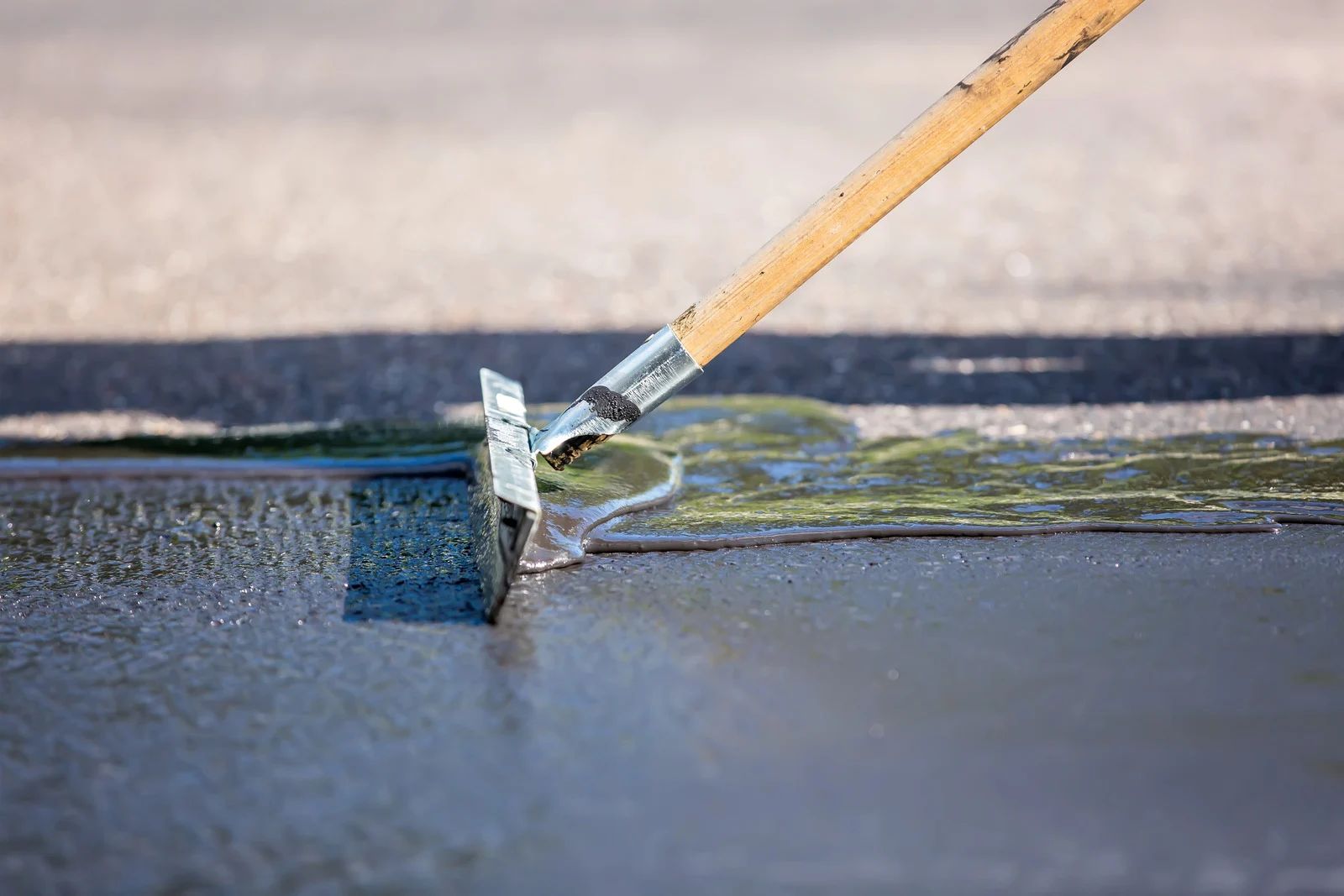
Sealcoating exists for exactly this window in a pavement's life. A proper job starts with cleaning the surface completely, sweeping and pressure-washing away dirt, oil residue, and loose debris, because sealant applied over grime never bonds the way it should. Once the surface is clean and dry, a coating goes down that's built to resist moisture penetration and cracking, forming a barrier between the sun and the oxidized binder underneath. That barrier is what restores the deep black color and slows the UV reaction that caused the fading in the first place.
It also helps with the everyday stuff a driveway or lot deals with: oil drips from a parked car, occasional fuel spills, the general wear of tires rolling across the same stretch of pavement day after day. None of that is dramatic on its own, but it adds up the same way UV exposure does, slowly, until the surface can't take much more.
Sealcoating is not a repair for cracked or crumbling asphalt, and any contractor who tells you otherwise is selling you something that won't hold up. It's a preventive layer, meant to go on before damage turns structural, or right after minor crack repair has already been done. Applied at the right stage, while fading is still mostly cosmetic, it buys years of life back for pavement that would otherwise keep oxidizing every summer.
Cosmetic Fading vs. a Pavement Emergency
The line between "needs attention soon" and "needs attention now" comes down to what's happening below the surface, not just what you can see from a distance. Uniform gray color with tight, hairline cracking is cosmetic aging. It's worth addressing, but the pavement isn't failing.
WARNING: If you see cracks wide enough to fit a coin into, sections that flex or feel spongy underfoot, or standing water that doesn't drain within a day of rain, stop planning for sealcoating and get the pavement inspected instead. Sealing over active structural damage traps moisture underneath and speeds up the failure it's supposed to prevent.
Potholes, alligator cracking that's connected across large sections, and edges that have started crumbling away from the base are all signs the problem has moved past what a surface coating can address. At that point, patching or a mill-and-overlay approach usually needs to happen before sealcoating makes sense again. Most residential driveways and small commercial lots along the coast never get that far. They get caught somewhere in the faded, cracking-but-stable stage, which is exactly where sealcoating does the most good.
Frequently Asked Questions
Why does asphalt turn gray instead of just staying black?
Black asphalt gets its color from oils in the binder. UV light breaks those oils down and they evaporate off the surface, so what's left reflects light differently and reads as gray or faded brown.
Is gray, faded asphalt still safe to drive or park on?
Usually, yes. Fading by itself is a surface-level, cosmetic change. It only becomes a safety or structural concern once cracking, crumbling, or soft spots show up alongside the color change.
How fast does UV damage show up on new asphalt?
It varies with sun exposure and pavement thickness, but fresh, unsealed asphalt along the coast can start showing visible fading within the first year, especially on surfaces that sit in full sun most of the day.
Can sealcoating bring back the black color once asphalt has already faded?
Yes, in most cases. A properly applied sealcoat restores a deep black appearance and adds a protective barrier over the oxidized layer, which is one reason it's used as much for the fading as for the cracking.
Does shade or tree cover really make a difference?
It does. Pavement under consistent shade oxidizes more slowly because it gets less direct UV exposure and runs cooler surface temperatures than pavement baking in full sun all day.
What's the difference between oxidation and normal wear from traffic?
Oxidation is a chemical reaction driven by sun and heat, and it happens whether or not anyone drives on the pavement. Traffic wear is physical, the grinding and pressure of tires, and it tends to show up first in wheel paths and turning areas rather than across the whole surface evenly.
Protecting Asphalt Before Surface Damage Goes Deeper
Faded asphalt is often the first visible sign that years of sunlight, heat, and moisture are changing the pavement’s surface. Addressing oxidation while the asphalt remains structurally sound can help preserve flexibility, limit moisture intrusion, and slow the development of larger cracks. In Myrtle Beach, SC, where coastal weather continually exposes pavement to strong sunlight and frequent rain, Able Asphalt Paving Inc. brings 15 years of experience evaluating asphalt conditions and determining when preventive surface protection still makes practical sense.
Once cracking becomes widespread, edges begin crumbling, or weak areas develop beneath the pavement, restoring appearance alone is no longer enough. Recognizing the difference between ordinary fading and deeper deterioration helps property owners make better maintenance decisions before repairs become more extensive. Regular observation, timely crack attention, and appropriate sealcoating can extend the useful life of asphalt while maintaining a cleaner, darker, more consistent surface that holds up better through repeated summers of heat, ultraviolet exposure, rainfall, and everyday traffic.